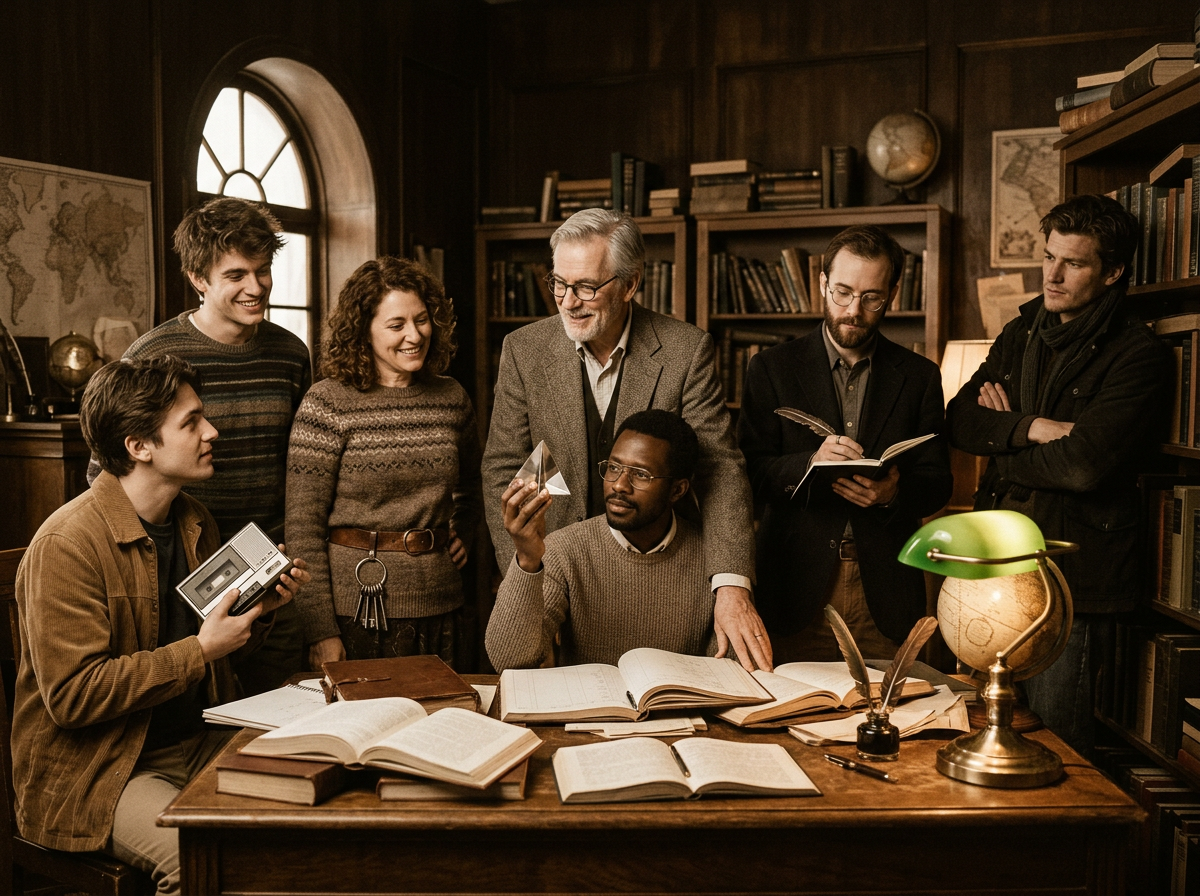
You arrived, most of you, thinking school was a place where finished knowledge got handed down like cafeteria trays: standardized, stackable, and not improved by contact with your actual lives.
That was never the point.
The point was to discover that an idea is not really alive until it has survived use. Not private admiration. Not elegant phrasing. Use. Consequence. Friction. The hard test of other people. If you learned anything in this room, I hope it was that thought is not a decorative activity for the inwardly overlit. Thought is what happens when habit fails and you are forced to rebuild, together, without pretending the break never happened.
Some of you discovered that method is a form of honesty.
Some of you discovered that care is infrastructure.
Some discovered that refusal is also a civic act.
Some discovered that self-trust is either the beginning of freedom or a very theatrical form of laziness, depending on whether you submit it to consequences.
A few of you, God help us, discovered all of these at once and made the rest of the semester structurally impossible.
Good.
The world you are entering is full of people who confuse certainty with intelligence, polish with truth, and authority with legitimacy. Do not help them. Ask what an idea does. Ask who bears the cost. Ask what kind of life it makes possible. Then revise accordingly.
Build things. Test them. Repair what fails. Keep near the people who make you more answerable, not less. And when you find a system that injures human beings while calling itself necessary, remember that necessity is very often just habit wearing a necktie.
I have taught many students. A few learn quickly. A few learn deeply. Almost none learn without first being inconvenienced by reality. You have, all of you, been inconvenienced in unusually promising ways.
That is the nicest thing I know how to say.
— Mr. Dewey